Reliable Fire Pump Performance — Every Time.
Diesel & Electric Fire Pump Repair, Maintenance & Inspections
Expert service for diesel and electric fire pumps, ensuring NFPA‑compliant reliability.
Certified Testing & Inspections
NFPA inspections to ensure complete reliability & compliance.
Repairs & Maintenance
Keeping your systems code-compliant and operational.
Compliance & Safety
Certified inspections and full NFPA fire code adherence.
Emergency Response
24/7 rapid dispatch for critical fire system failures.
Complete Fire Pump Service
Inspection, Testing, Maintenance, Repair
A&M Fire Protection provides comprehensive fire pump services to ensure your emergency water supply system functions flawlessly when lives and property are on the line. Fire pumps are the heart of a building’s fire suppression system, requiring precise care and strict compliance with NFPA 25 standards and local fire codes.
Our certified technicians handle complete end-to-end service for both electric and diesel fire pump systems, offering:
Routine Inspections
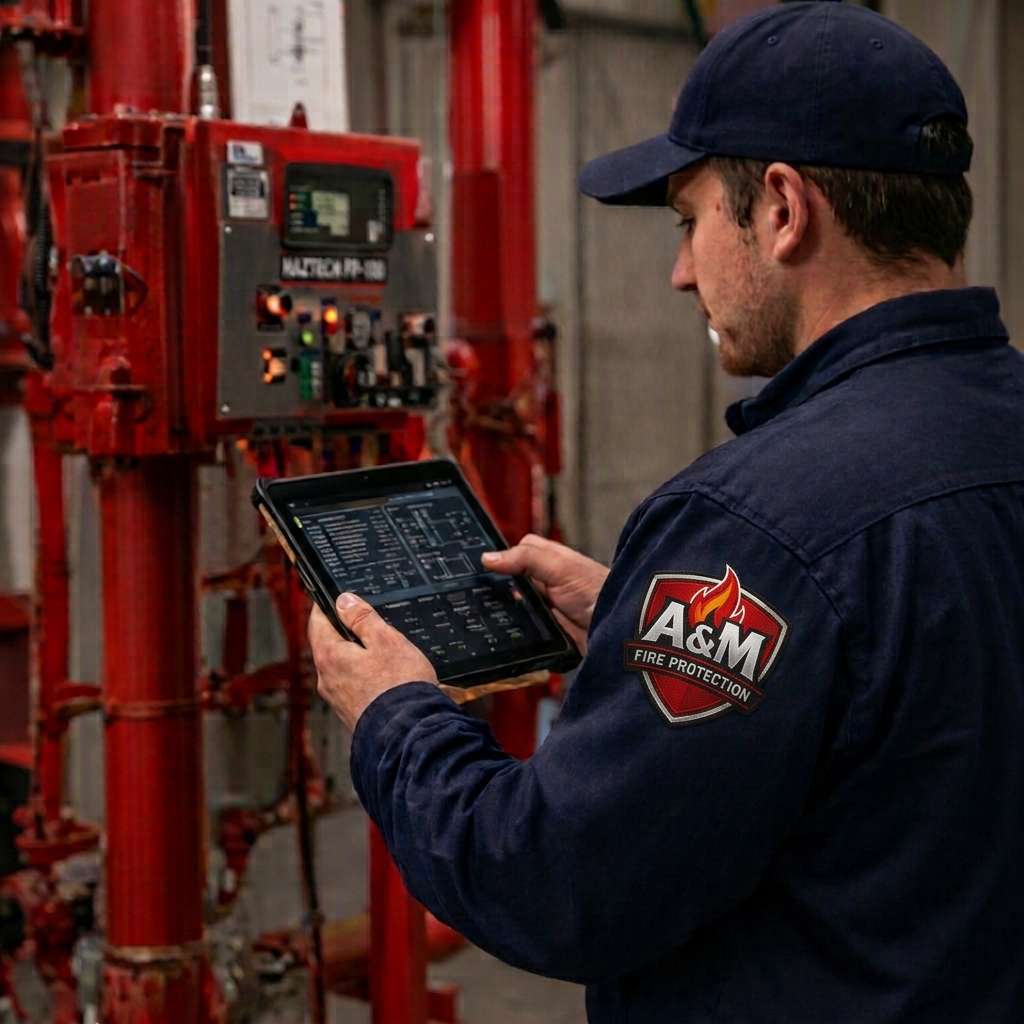
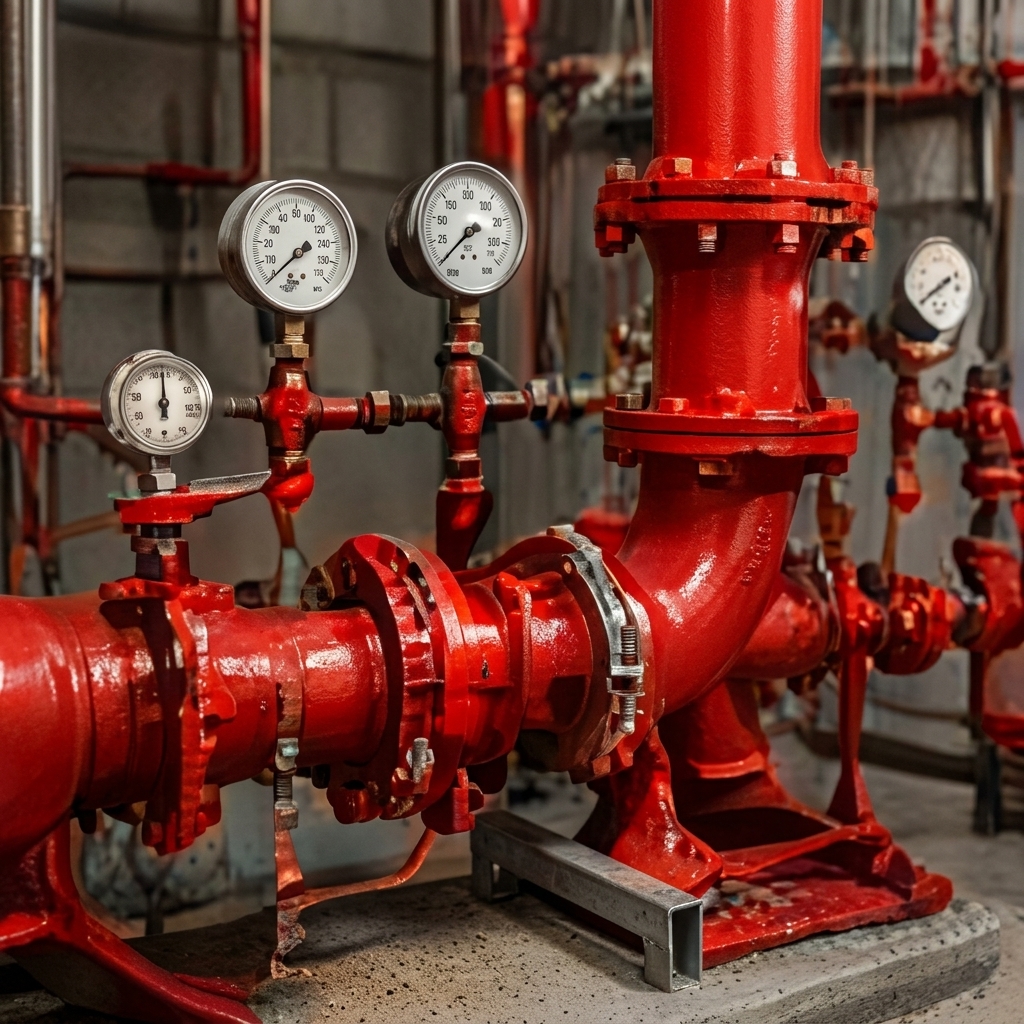
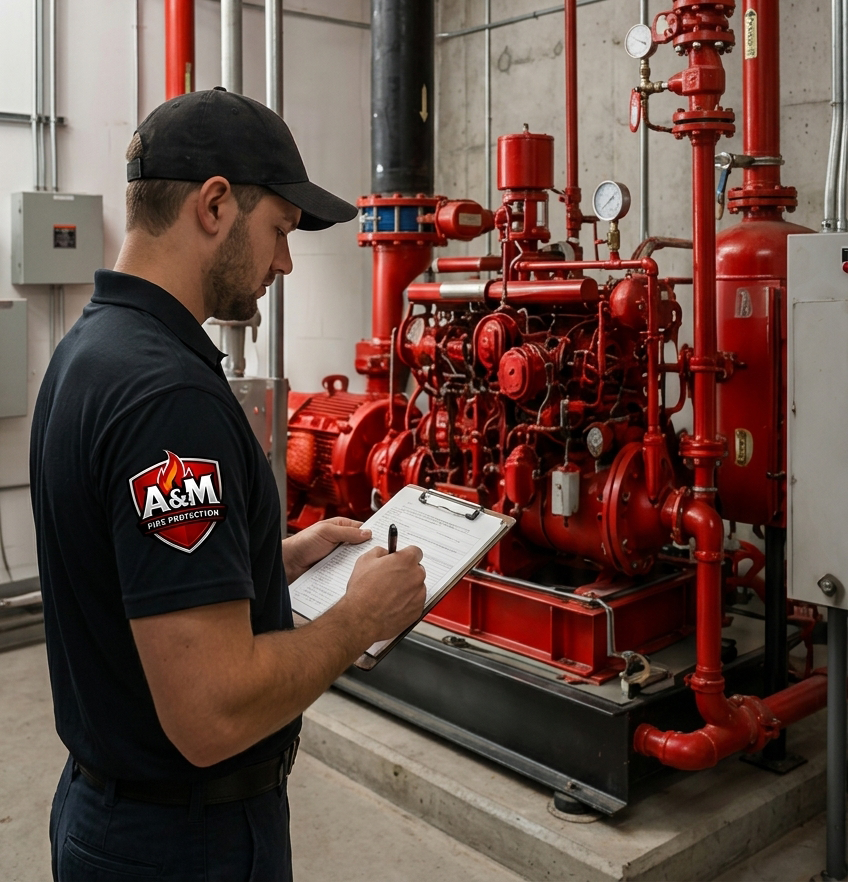
Detailed visual checks of pump assemblies, control panels, pressure relief valves, suction/discharge piping, and fuel systems to catch potential failure points before emergencies happen.
Flow & Performance Testing
Annual full-flow churn, 100%, and 150% capacity testing to verify performance against original design curves, along with weekly or monthly churn runs for automatic start systems.
Repairs & Overhauls
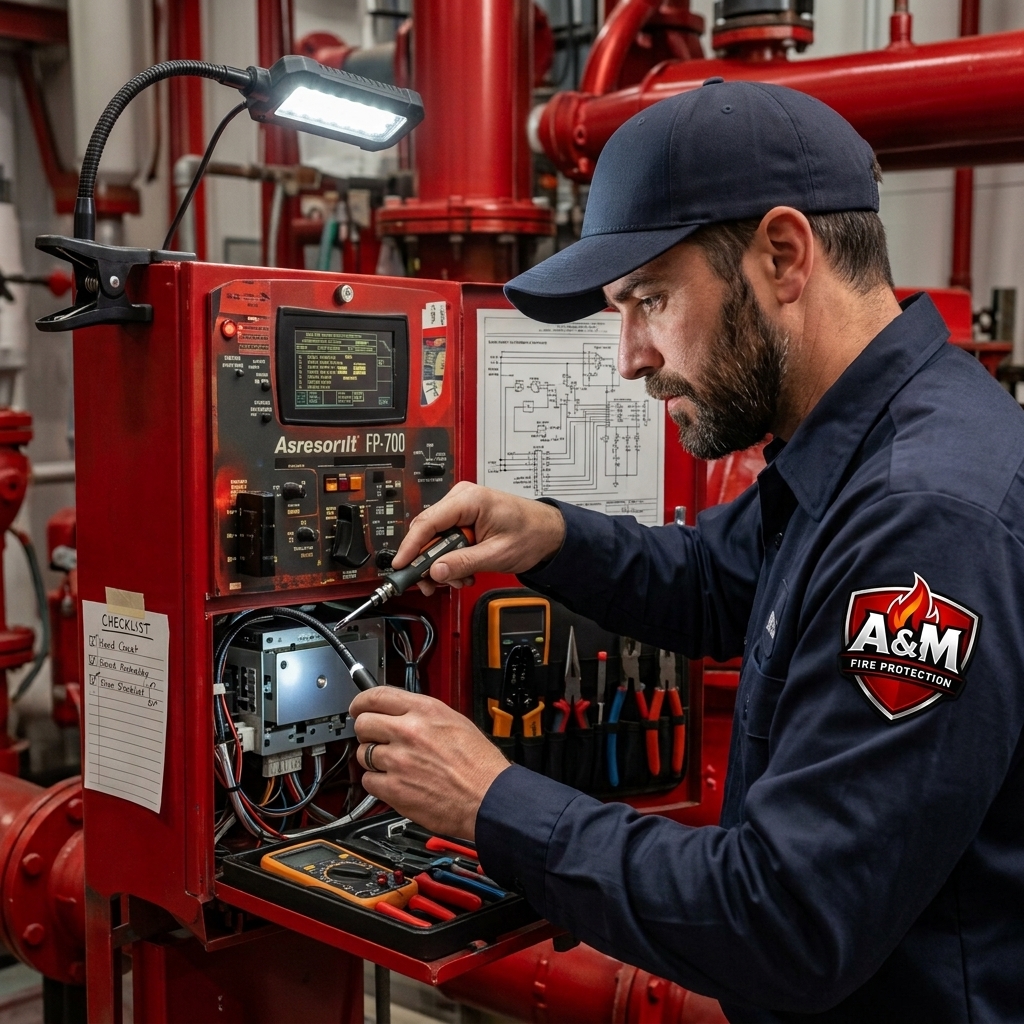
Swift troubleshooting and repair of mechanical seals, impellers, controllers, transfer switches, pressure switches, and engine components to restore your system to full operational status without delay.
Preventative Maintenance
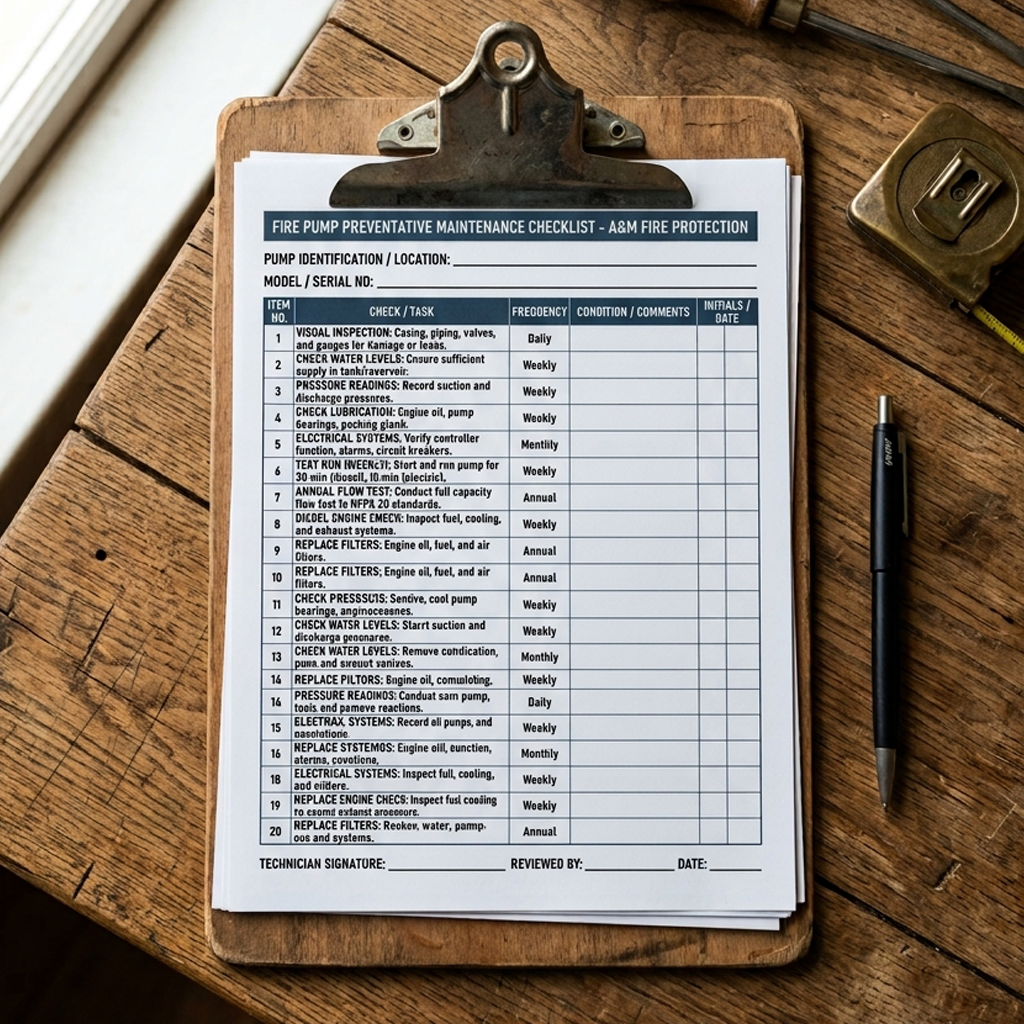
Specialized care tailored to motor driver types—including oil changes, filter replacements, battery/charging system checks, and cooling line service for diesel engines, as well as electrical component inspections and shaft lubrication for electric motors.
We Service Both Diesel & Electric Fire Pump Systems
Diesel Fire Pumps
Electric Fire Pumps
Wht It Matters
Keep Your Fire Pump Ready
A fire pump may sit unused for long periods, but when a fire occurs, it has to work immediately. Regular inspections, testing and maintenance help protect your equipment, your building and the people inside.
Protect Your System
Indentify small issues before they become major problems.
Ensure Reliability
Maintain performance so your pump is ready when needed.
Reduce Unexpected Costs
Prevent breakdowns and costly emergency repairs.
Support Compliance
Stay update with inspection, testing and code requirements.
FAQ's
Fire pump systems require testing on weekly/monthly, quarterly, annual, and multi-year schedules to comply with NFPA 25 standards. Weekly or monthly no-flow (churn) tests ensure automatic start mechanisms function properly. Annual full-flow performance tests verify that the pump can still deliver its rated pressure and capacity.
Electric Pumps: Focus primarily on electrical infrastructure, including automatic transfer switches, control panels, circuit breakers, wiring integrity, and motor bearing lubrication.
Diesel Pumps: Require standard internal combustion engine maintenance alongside pump checks, including engine oil and filter changes, coolant line servicing, fuel tank moisture checks, and battery charging system testing.
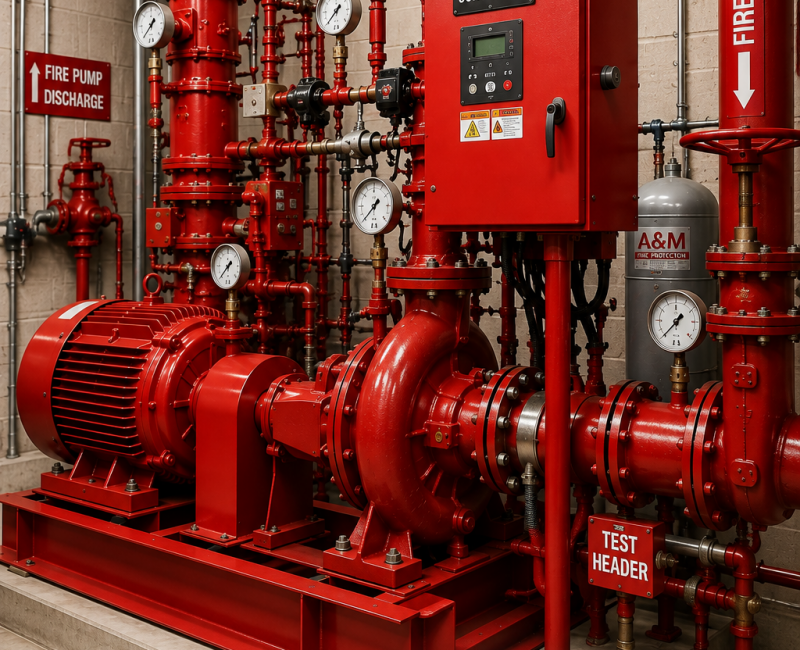
During an annual flow test, technicians run the fire pump at churn (zero flow), 100% capacity, and 150% capacity. Water is discharged through a test header while pressure gauges and flow meters measure performance. The resulting data is plotted against the pump’s original factory curve to detect impeller wear or system degradation.
Fire pumps sit idle for long periods, which can lead to seized impellers, degraded mechanical seals, dead batteries, corrupted control wiring, or stale diesel fuel. Preventative maintenance identifies and resolves minor mechanical failures before an actual fire emergency occurs, while maintaining code compliance for insurance and local authority requirements (AHJ).
Common failure points include dead or weak starting batteries (on diesel units), faulty pressure switches, clogged fuel or cooling lines, packing gland seal leaks, and control panel relay failures. Regular inspection schedules catch these issues early to keep the system fully operational.
If your fire pump fails a performance or churn test, immediate action is required to ensure building safety, maintain code compliance, and avoid regulatory penalties.
Immediate Steps to Take After a Failed Test
Notify Key Stakeholders: Inform your local Authority Having Jurisdiction (AHJ / Fire Marshal) and your property insurance carrier immediately, as required by NFPA 25 standards.
Implement Impairment Procedures: If the failure compromises the entire fire suppression system, establish a temporary fire watch (trained personnel patrolling the premises) or arrange an alternative emergency water supply.
Diagnose and Repair: Certified fire protection technicians must troubleshoot the root cause—whether it’s a failed pressure switch, worn impeller, battery/engine failure on a diesel unit, or control panel fault—and complete the necessary repairs.
Re-test and Document: Once repairs are finished, the system must undergo a full re-test (including flow testing) to verify it meets its original performance curve. Submit the updated compliance reports to the AHJ and your insurer to lift the impairment status.
Schedule Your Fire Pump Inspection Today
Keep Your Fire Pumps Compliant, Certified, and Ready to Protect
Don't wait for an emergency or an unexpected system failure to find out if your fire pumps are operational. A&M Fire Protection provides complete inspection, testing, maintenance, and 24/7 repair services for electric and diesel fire pump systems to ensure total code compliance and peak reliability.
- Fully Licensed
- 100% Customer Satisfaction
- Customizable Solutions to Fit Your Schedule
- Friendly & Professional Team
- 24/7 Emergancy Support
- Personalized Consultations to Address Your Needs
- Commercial, Government, Manufacturing & Industrial Solutions